Need a Quick Test? Give us a Call!
New to hydrostatic testing? Read our plain-English guide: Hydrostatic Testing in DFW: How the Test Works.
Hydrostatic Testing · Dallas–Fort Worth, TX
Hydrostatic Testing in Dallas-Fort Worth, TX
Hydrostatic testing is a precise method for evaluating the integrity of plumbing systems using water pressure. This non-invasive testing identifies leaks, verifies repairs, and confirms code compliance without damaging your pipes. Our professional hydrostatic testing services provide the documentation needed for real estate transactions, permit requirements, and confidence about your Dallas-Fort Worth home’s plumbing.
What Is Hydrostatic Testing?
Hydrostatic testing uses water under controlled pressure to detect leaks and assess plumbing system condition. The process involves filling pipes with water, pressurizing the system to a specific level, and monitoring pressure over time. Pressure drops indicate leaks, while stable pressure confirms system integrity. This testing method is highly accurate and can detect even small leaks that might not be visible during normal use.
The Hydrostatic Testing Process
Our systematic approach ensures accurate results:
Documentation – We provide written test results including pressure readings, test duration, and pass/fail determination.
System Preparation – We seal or plug drain outlets and access points to isolate the section being tested.
Filling and Pressurization – The system is filled with water and pressurized to the specified test level, typically 10 feet of water column for residential sewer lines.
Monitoring Period – We monitor pressure for 15-30 minutes, documenting any pressure loss.
Results Analysis – Pressure stability indicates a sound system. Pressure drops reveal leaks requiring further investigation or repair.
It’s particularly valuable for:
- Underground pipes and sewer lines
- Newly installed plumbing systems
- Pre-purchase home inspections
- Post-repair verification
- Permit and code compliance documentation
- Insurance claims requiring leak verification
Sewer Line Hydrostatic Testing
Sewer line problems can be expensive and disruptive. Hydrostatic testing evaluates sewer system condition before problems escalate:
Pre-Purchase Testing Many real estate transactions now require sewer line verification. Our testing provides buyers with confidence and protects sellers from post-sale disputes.
Leak Detection If you suspect sewer line damage from tree roots, ground shifting, or pipe deterioration, hydrostatic testing pinpoints leak locations.
Post-Repair Verification After sewer line repairs, testing confirms the work was successful and the system is leak-free.
When Is Hydrostatic Testing Required?
Several situations call for professional hydrostatic testing
Real Estate Transactions – Many home buyers request sewer line testing before closing, especially for older homes or properties with trees near sewer lines.
Building Permits – New construction and major plumbing renovations often require hydrostatic testing to verify code compliance before final inspection.
Insurance Claims – Water damage claims may require testing to document leak sources and system condition.
Preventive Maintenance – Proactive testing identifies potential problems before they cause damage or require emergency repairs.
Benefits of Professional Testing
Our hydrostatic testing provides valuable advantages:
Accuracy Detects leaks too small to find through visual inspection
Documentation provides written proof of system condition
Prevention identifies problems before they cause major damage
Cost Savings Early detection prevents expensive emergency repairs
confidence Confirms your plumbing system’s integrity

Our Service Guarantee

1-Year Parts and Labor Warranty on all plumbing work.

5-Year Parts and Labor Warranty on slab leak detection and tunnel repairs.

Licensed and Insured Plumbers.

Upfront pricing with no hidden fees.
Same-day service available.
Beyond Hydrostatic Testing
When testing reveals problems, we provide complete solutions:
Video Camera Inspection :We use advanced cameras to visually inspect pipe interiors and identify damage locations.
Leak Repair: Our experienced plumbers repair identified leaks using appropriate methods for each situation.
Complete Solutions: From detection through repair, we provide end-to-end service backed by our warranty protection.
Professional Equipment and Expertise: Accurate hydrostatic testing requires specialized equipment and trained technicians. We invest in quality testing equipment and ongoing training to deliver reliable results. Our technicians understand testing protocols, pressure requirements, and documentation standards.
Areas We Serve
Frequently Asked Questions We Receive About Hydrostatic Testing
What exactly is a hydrostatic plumbing test?
A hydrostatic test is a highly accurate diagnostic method used to find hidden leaks in your home’s sanitary sewer system or underground water lines. By plugging the main sewer line and filling the system with water, our plumbers observe the water level to see if it holds steady. If the water level drops, it confirms there is a leak somewhere in your subterranean pipes.
How do I know if my home needs a hydrostatic test?
You should consider scheduling a test if you are experiencing frequent, unexplained sewer backups, noticing wet spots near your foundation, dealing with unusually high water bills, or smelling foul sewer odors inside the house. It is also highly recommended when buying an older home (especially those built before 1970 with aging cast-iron pipes) or before and after major foundation repairs to ensure your plumbing hasn’t shifted or cracked.
How is the test actually performed?
First, our technicians locate your home’s main sewer cleanout on the exterior of your property. We insert an inflatable test ball into the pipe to temporarily block the flow of wastewater to the municipal sewer.
Next, we fill your home’s drainage system with water up to the slab level (usually visible in a first-floor shower or tub drain). We then monitor this standing water level for 15 to 20 minutes. If the water drops, we know the system is compromised.
Will the pressure from a hydrostatic test damage my pipes?
No, it will not. This is a very common misconception. For residential sewer lines, “hydrostatic testing” simply means filling the pipes with standing water up to their normal, intended capacity. We do not use high-pressure pumps that would artificially stress or burst your plumbing. It is a completely safe, non-destructive way to evaluate the health of your system.
How long does the entire testing process take?
The active testing period—where we monitor the water level to see if it drops—only takes about 15 to 20 minutes. However, factoring in the necessary setup, locating the cleanout, inserting and inflating the test balls, and filling the entire line with water, you can expect the full appointment to take roughly 60 to 90 minutes from start to finish.
What happens if my plumbing fails the test?
If the water level drops and a leak is confirmed, the next step is pinpointing its precise location. A standard hydrostatic test tells us that there is a leak, but not where it is. At Pact Plumbing, we will immediately transition to “isolation testing” by blocking off smaller, specific sections of your plumbing, paired with high-definition video camera inspections, to locate the exact crack or break beneath your slab.
Can I perform a hydrostatic test myself?
While the core concept is simple, executing it correctly and safely requires specialized equipment (like commercial-grade inflatable test balls) and professional expertise. If a test ball is inserted incorrectly or deflates during the process, it could send gallons of standing water rushing back up into your home’s drains. It is always best to rely on a licensed professional to ensure accurate results and protect your property from accidental flooding.
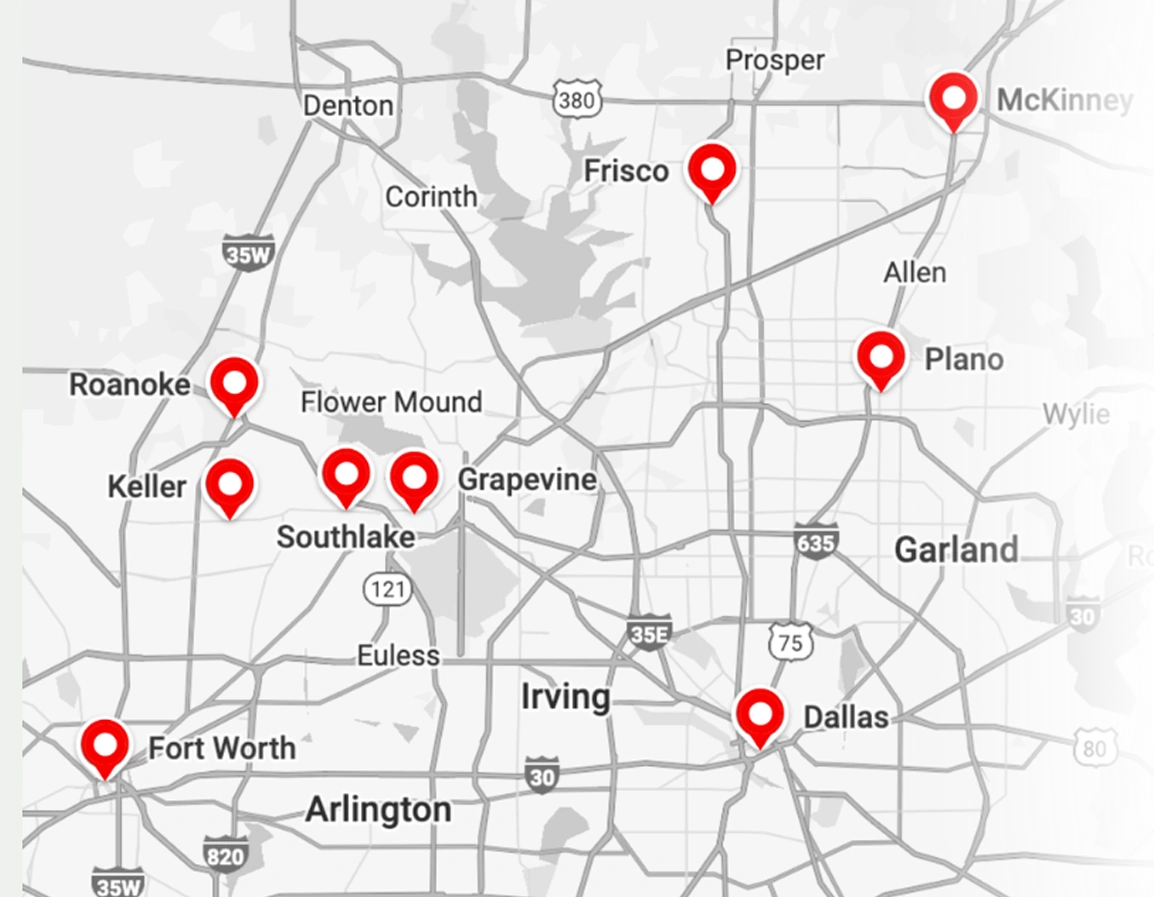
Serving The Dallas-Fort Worth Metroplex
We serve residential and commercial customers throughout the DFW area, including Keller, Southlake, Grapevine, Fort Worth, Roanoke, Frisco, McKinney, Plano, and all other suburbs. Our plumbers know the unique plumbing challenges facing homes in North Texas and arrive prepared to solve them efficiently.
Whether you need emergency plumbing repair or are planning a bathroom upgrade, we deliver professional service that protects your home and your budget. Contact us today!