
Need A New Water Heater?
We Can Install It Today!
Water Heater Installation · Dallas–Fort Worth, TX
Water Heater Installation in Dallas-Fort Worth, TX
Installing a new water heater is a significant home improvement that affects your comfort, utility costs, and property value. Whether you’re replacing a failed unit or upgrading to a more efficient model, professional installation ensures safe operation, optimal performance, and long service life. Our expert water heater installation services help Dallas-Fort Worth homeowners choose the right system and install it correctly the first time
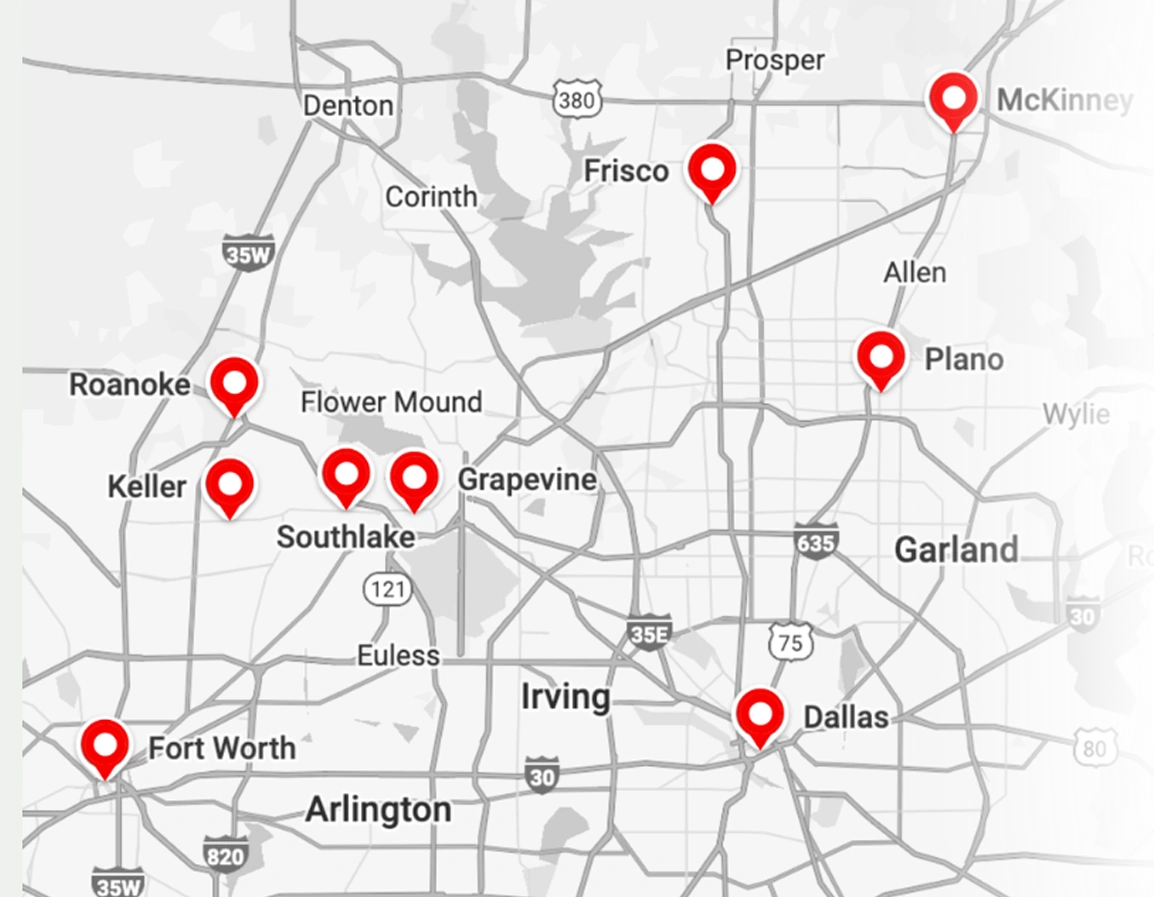
At Pact Plumbing, we understand that a failing water heater is more than just an inconvenience; it is a major disruption to your daily life. Serving the entire DFW area—from the historic neighborhoods of Fort Worth to the booming suburbs of Plano, Frisco, and Arlington—our licensed and highly trained technicians are dedicated to keeping your hot water flowing safely and efficiently. We are not just another plumbing contractor; we are your local water heating experts. We specialize in complete water heater solutions, offering rapid repairs, careful installations, routine maintenance, and high-efficiency system upgrades tailored specifically to the demands of North Texas homes.
Types of Water Heaters We Install
Tank Water Heaters
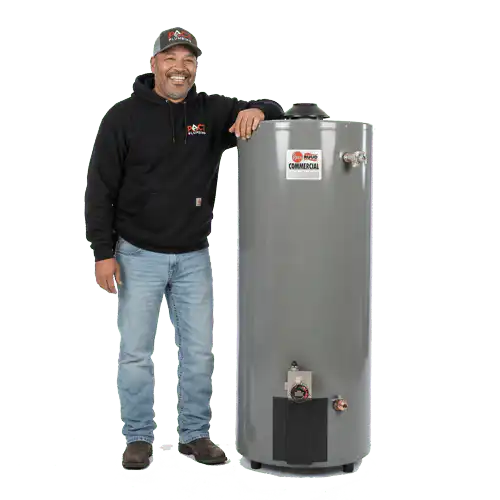
Traditional tank water heaters store and heat 30-80 gallons of water, providing reliable hot water for most households. Modern tank models offer improved insulation, more efficient burners, and longer warranties than older units.
- Lower upfront cost than tankless models
- Simpler installation and maintenance
- Proven, reliable technology
- Adequate capacity for typical household needs
- Works well with existing plumbing infrastructure
Available in:
- Electric models (common in areas without gas service)
- Natural gas models (lower operating costs)
- Propane models (for homes without natural gas)
- Various capacities from 30 to 80+ gallons
Benefits:
- Various capacities from 30 to 80+ gallons
- Electric models (common in areas without gas service)
- Natural gas models (lower operating costs)
- Propane models (for homes without natural gas)
Tankless Water Heaters
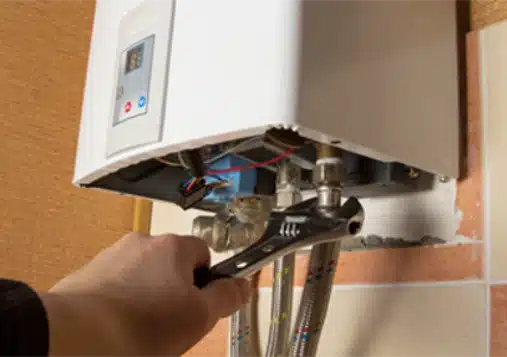
Tankless (on-demand) water heaters heat water only when needed, providing endless hot water while reducing energy consumption. These compact units mount on walls and last significantly longer than tank models.
Consideration:
- Higher initial investment
- May require gas line or electrical upgrades
- Professional sizing is critical for adequate flow
- Regular maintenance required to prevent mineral buildup
Benefits:
- Unlimited hot water supply
- 20-30% energy savings compared to tank models
- Longer lifespan (typically 20+ years)
- Space-saving compact design
- Lower risk of water damage from tank failures
- Qualifies for energy efficiency rebates in many cases
Why Professional Installation Matters
Proper water heater installation is critical for:
Safety Incorrect venting, gas connections, or electrical work poses serious risks
Efficiency Poor installation reduces performance and increases operating costs
Longevity Proper installation prevents premature failures
Warranty Protection Manufacturer warranties often require professional installation
Code Compliance Permits and inspections may be required
Choosing the Right Water Heater
Selecting the appropriate water heater involves several factors:
Household Size and Usage
- 1-2 people: 30-40 gallon tank or small tankless
- 2-3 people: 40-50 gallon tank or medium tankless
- 3-4 people: 50-60 gallon tank or large tankless
- 5+ people: 60-80 gallon tank or multiple tankless units
Fuel Type
- Natural gas typically costs less to operate than electricity
- Electric models work anywhere and are easier to install
- Propane is an option for homes without natural gas service
Energy Efficiency
- High-efficiency models cost more initially but save money over time
- Look for Energy Star certification
- Consider the Uniform Energy Factor (UEF) rating—higher is more efficient
Available Space
- Tank models need adequate floor space and clearance
- Tankless units offer flexibility in placement
- Consider the location relative to hot water usage points
Budget
- Balance initial cost against long-term operating expenses
- Factor in potential utility rebates for efficient models
- Consider warranty coverage and expected lifespan
Our experienced technicians help you evaluate these factors and choose the water heater that best fits your needs and budget.
Our Professional Installation Process
1. Free Consultation and Estimate
We assess your current water heater, discuss your hot water needs, and evaluate your home’s infrastructure. We provide detailed estimates for recommended options with transparent pricing.
- Proper venting (gas models) for safe combustion
- Adequate combustion air supply
- Correct the drain pan and overflow protection
- Temperature/pressure relief valve and discharge pipe
- Expansion tanks were required by code
- Gas line sizing and testing (gas models)
- Electrical requirements (electric models)
- Proper clearances for maintenance and safety
2. Proper Sizing
Undersized water heaters leave you without adequate hot water. Oversized units waste energy and money. We calculate the right size based on your household’s hot water demand, usage patterns, and peak flow requirements.
3. Code-Compliant Installation
We install water heaters according to all local codes and manufacturer specifications:
- Proper venting (gas models) for safe combustion
- Adequate combustion air supply
- Correct the drain pan and overflow protection
- Temperature/pressure relief valve and discharge pipe
- Expansion tanks were required by code
- Gas line sizing and testing (gas models)
- Electrical requirements (electric models)
- Proper clearances for maintenance and safety
4. System Upgrades When Needed
Upgrading to a new water heater sometimes requires infrastructure improvements:
- Gas line sizing for higher BTU tankless units
- Electrical panel upgrades for large electric models
- Venting modifications for high-efficiency models
- Water line modifications for optimal placement
5. Old Unit Removal and Disposal
We safely disconnect, remove, and dispose of your old water heater in an environmentally responsible manner, hauling away all debris.
6. Complete Testing
After installation, we thoroughly test your new water heater:
- Check all connections for leaks
- Verify proper temperature settings
- Test safety valves and controls
- Ensure adequate hot water delivery
- Confirm proper venting (gas models)
- Demonstrate operation and maintenance
7. Warranty Registration
We register your new water heater warranty and provide all documentation for your records.

Our Service Guarantee

1-Year Parts and Labor Warranty on all plumbing work.

5-Year Parts and Labor Warranty on slab leak detection and tunnel repairs.

Licensed and Insured Plumbers.

Upfront pricing with no hidden fees.

Same-day service available.
Tank Water Heater Installation
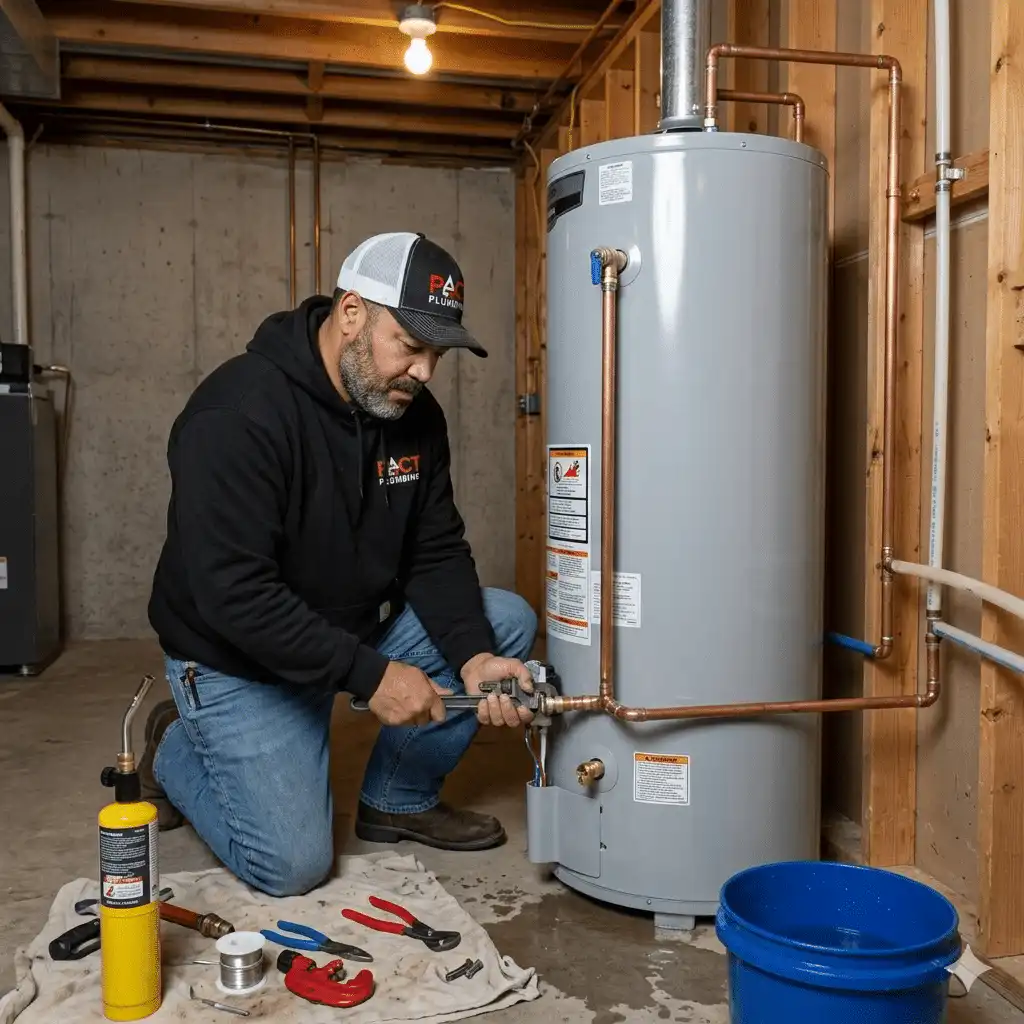
Standard tank installations typically take 2-4 hours. The process includes:
- Shutting off water, gas/electric, and draining old tank
- Disconnecting supply lines and venting
- Removing old unit
- Installing new unit with proper supports
- Connecting water, gas/electric, and venting
- Installing drain pan and safety valves
- Testing and adjusting temperature
- Checking all connections for leaks
Tankless Water Heater Installation
Tankless installations are more complex and typically take 4-8 hours::
- Evaluating and potentially upgrading gas lines or electrical
- Installing proper venting (gas models)
- Mounting unit securely to wall
- Running new water lines if needed
- Installing isolation valves for maintenance
- Connecting and testing all systems
- Programming unit settings
- Explaining operation and maintenance
Maintenance for Long Life
Proper maintenance extends your water heater’s lifespan:
For Tank Water Heaters:
- Annual flushing to remove sediment
- Anode rod inspection and replacement every 3-5 years
- Temperature/pressure relief valve testing
- Visual inspection for leaks and corrosion
For Tankless Water Heaters:
- Annual descaling to prevent mineral buildup
- Air filter cleaning
- Burner and heat exchanger inspection
- Software updates when available
Warranty Protection
We stand behind our installation work with a complete 1-year parts-and-labor warranty, in addition to the manufacturer’s warranty on the water heater itself. This double protection ensures your investment is safeguarded.
Areas We Serve
Frequently Asked Questions We Receive About Water Heater Installation
How long do water heaters actually last in the DFW Metroplex?
With proper annual maintenance, a traditional tank water heater will generally last between 10 and 12 years. High-efficiency tankless water heaters have a longer lifespan, often lasting 15 to 20 years. However, if your home does not have a water softener, the aggressive hard water in North Texas can drastically cut these lifespans down to just 6 to 8 years due to severe calcification.
What size water heater do I need for my home?
Proper sizing is critical. A system that is too small will leave you taking cold showers, and a system that is too large will waste massive amounts of energy. For a standard tank, a household of 1 to 2 people usually needs a 30- to 40-gallon tank, while a family of 4 or more typically requires a 50-gallon tank. If you upgrade to a tankless system, we size the unit based on the “Flow Rate” (GPM) needed to run multiple fixtures—like a shower and a dishwasher—simultaneously.
Can I switch from a traditional tank to a tankless water heater?
Absolutely! Upgrading to a tankless system is one of the most popular services we offer at Pact Plumbing. It does require some retrofitting, such as upgrading your gas lines to handle a higher BTU load, modifying the exhaust venting, and installing a dedicated electrical outlet. While the initial investment is higher, the endless hot water and long-term energy savings make it highly worthwhile.
How long does it take to install a new water heater?
A direct swap—meaning we are replacing an old gas tank with a new gas tank of the exact same size—usually takes our certified plumbers about 2 to 3 hours. If you are converting from a traditional tank to a modern tankless system, the installation is more complex and typically takes between 6 and 8 hours to complete safely and up to code.
Do you haul away the old water heater after the new one is installed?
Yes. Pact Plumbing provides a completely turnkey installation service. We safely drain, disconnect, and haul away your heavy, deteriorating water heater and ensure it is properly recycled. We leave your utility closet or garage spotless.
Does a new water heater installation require a city permit in DFW?
Yes, almost all municipalities across the Dallas-Fort Worth metroplex require a permit for a water heater replacement. This is to ensure the unit is installed in accordance with strict safety codes for gas line connections, carbon monoxide venting, and pressure relief. Pact Plumbing handles all the necessary pulling of permits and compliance documentation for you.
What is a thermal expansion tank, and why did the plumber say I need one?
When water is heated, it expands. In modern homes with “closed loop” plumbing systems (which prevent water from flowing back into the municipal city lines), the expanding water creates dangerous pressure inside your pipes. A thermal expansion tank is a small secondary tank that absorbs this excess pressure, preventing your pipes and your new water heater from bursting. It is now mandatory in many DFW cities for new installations.
Get Your New Water Heater Today
Contact us for a free consultation and estimate. We’ll help you choose the right water heater for your home and provide professional installation
Serving Carrollton: water heater installation in Carrollton, TX.