
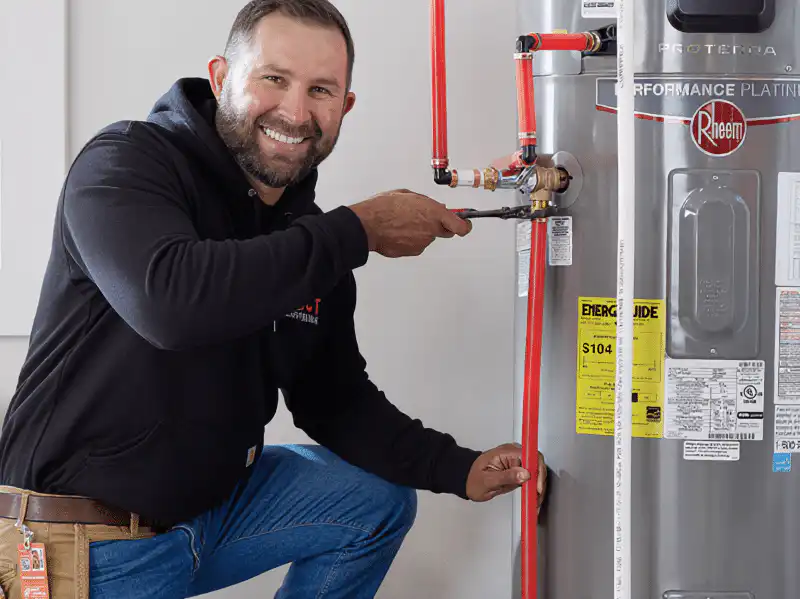
Taking Cold Showers? Call Today!
Water Heater Repair · Dallas–Fort Worth, TX
Water Heater Repair in Dallas-Fort Worth, TX
Cold showers, dirty dishes, and laundry backup are just the beginning. Our professional water heater repair services quickly diagnose and fix problems with all types of water heaters – restoring hot water and comfort to your home.
Common Water Heater Problems We Fix Same Day
Complete loss of hot water is one of the most urgent plumbing problems. The cause depends on your water heater type:
- Electric Water Heaters: Failed heating elements, tripped breakers, or faulty thermostats are common culprits. We test electrical components and replace failed parts.
- Gas Water Heaters: Pilot light issues, gas valve failures, or thermocouple problems prevent heating. We diagnose gas system issues and restore proper operation safely.
- Tankless Water Heaters: Flow sensor issues, ignition failures, or mineral buildup can stop heat production. We service all tankless water heater brands and models.
Insufficient Hot Water
Running out of hot water faster than normal indicates several possible issues:
- Sediment buildup reduces tank capacity and heating efficiency
- Failing heating elements (electric) don’t produce full heat
- Dip tube deterioration allows cold and hot water to mix
- Incorrect thermostat settings limit water temperature
- Tank size is inadequate for household needs
Pilot Light Won’t Stay Lit
- Faulty thermocouple not sensing pilot flame
- Dirty pilot orifice restricting gas flow
- Draft issues are blowing out the pilot
- Gas supply problems
For gas water heaters, a pilot light that won’t stay lit prevents hot water production. Causes include:
We clean or replace components to restore reliable pilot operation.
Rusty or Discolored Water
If hot water appears rusty, brown, or discolored while cold water runs clear, the issue is likely:
- Corroded anode rod (replaceable)
- Tank interior corrosion (requires replacement)
- Sediment accumulation (requires flushing)
We determine the cause and recommend repair or replacement based on the water heater’s age and condition.
Strange Noises
Rumbling, popping, banging, or hissing sounds from your water heater signal problems requiring attention:
- Rumbling/Popping Sediment buildup at the tank bottom causes these sounds as water boils beneath the sediment layer. Flushing removes sediment and eliminates noise.
- Banging Loose heating elements can bang against the tank. We secure or replace elements to eliminate the noise.
- Hissing/Sizzling. These sounds may indicate condensation dripping on the burner or scale buildup. We diagnose the source and provide appropriate repairs.
- High-Pitched Whining Common in tankless units, this often indicates mineral scale restricting water flow through the heat exchanger.
Water Heater Leaking
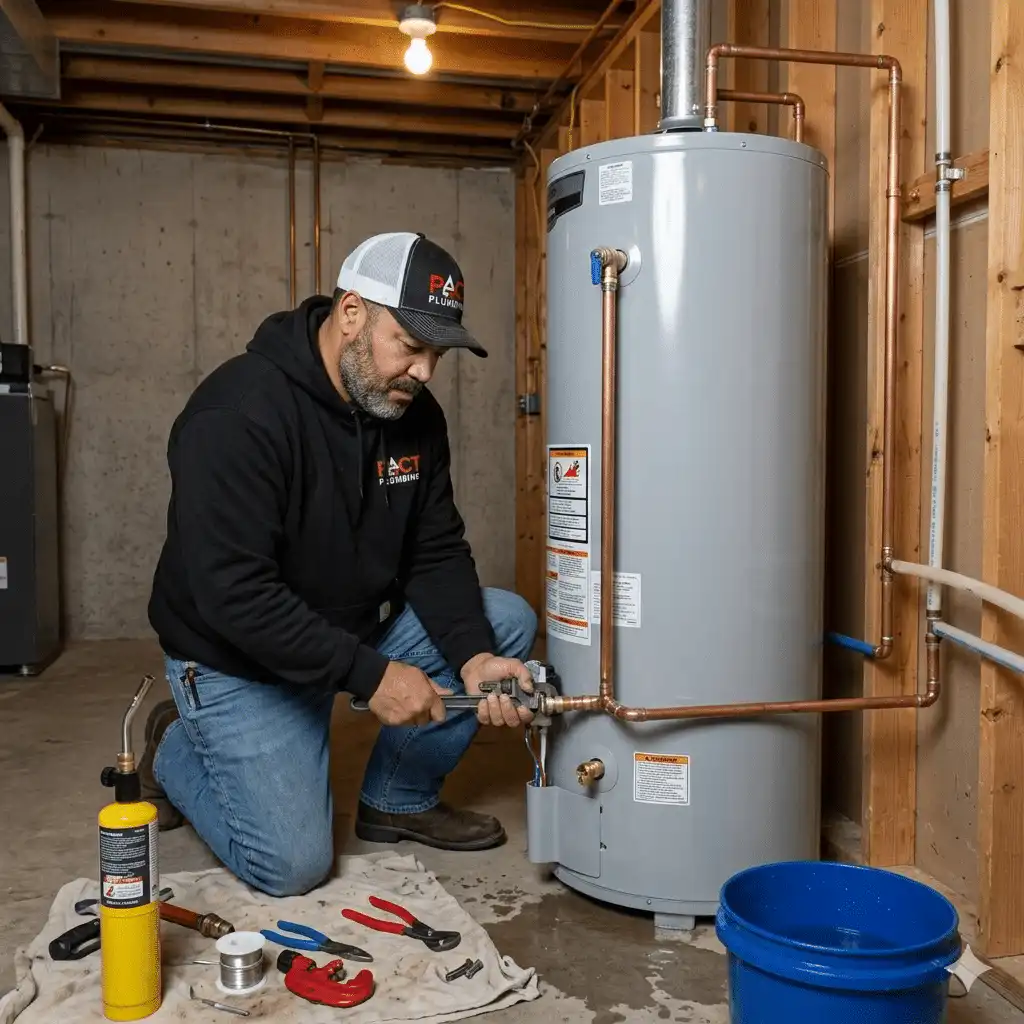
Water heater leaks range from minor to serious:
- Temperature/Pressure Relief Valve Leaking. This safety valve may leak if pressure is too high or the valve itself is faulty. We test system pressure and replace valves as needed.
- Drain Valve Leaking A loose or worn drain valve can usually be tightened or replaced quickly.
- Tank Leaking L: looseness of the tank itself indicates corrosion and requires replacement. Tank corrosion cannot be reliably repaired.
- Pipe Connection Leaks Loose or corroded connections at the inlet, outlet, or pressure relief valve can be repaired or replaced.
Low Hot Water Pressure
If hot water pressure is significantly lower than cold water pressure, the problem may be:
- Sediment clogging the dip tube or outlet
- Partially closed valve at the water heater
- Corroded pipes restricting flow
- Tankless unit with scale buildup in the heat exchanger
Repair or Replace?
We provide honest assessments about whether repair or replacement makes the most sense. Consider replacement if:
- The water heater is more than 10-12 years old (tank) or showing age-related issues
- Repair costs approach 50% of replacement cost
- The tank is leaking due to corrosion
- You’re experiencing frequent problems
- You want to upgrade to a more efficient model
Preventive Maintenance
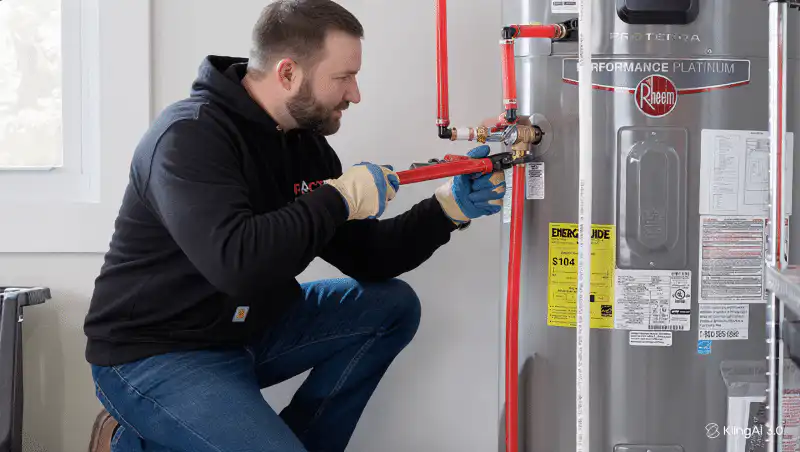
Annual water heater maintenance prevents many common problems:
- Flushing sediment from the tank
- Testing the temperature/pressure relief valve
- Inspecting and replacing the anode rod
- Checking gas connections and venting (gas models)
- Testing heating elements and thermostats (electric models)
- Inspecting for leaks and corrosion
Water Heater Repair Process
- Diagnosis: We thoroughly inspect your water heater, test components, and identify the problem.
- Explanation:n We explain the issue, repair options, and costs in plain language before proceeding.
- Expert Repairs:ir Our experienced technicians complete repairs efficiently using quality parts.
- Testing: We test the water heater thoroughly to ensure proper operation and safety.
- Maintenance Recommendations: We provide guidance to extend your water heater’s lifespan.
Why Choose Our Water Heater Repair Services
Don’t suffer without hot water. Contact us today for fast, professional water heater repair throughout Dallas-Fort Worth.
- Experienced technicians trained on all water heater brands
- Fully stocked trucks for same-visit repairs
- Transparent pricing with no hidden fees
- 1-year parts and labor warranty on all repairs
- Respectful service that protects your home
Emergency Water Heater Repair
Water heater failures don’t wait for convenient times. We provide prompt emergency repair service throughout Dallas-Fort Worth to restore hot water when you need it most. Most repairs are completed the same day.

Our Service Guarantee

1-Year Parts and Labor Warranty on all plumbing work.

5-Year Parts and Labor Warranty on slab leak detection and tunnel repairs.

Licensed and Insured Plumbers.

Upfront pricing with no hidden fees.

Same-day service available.
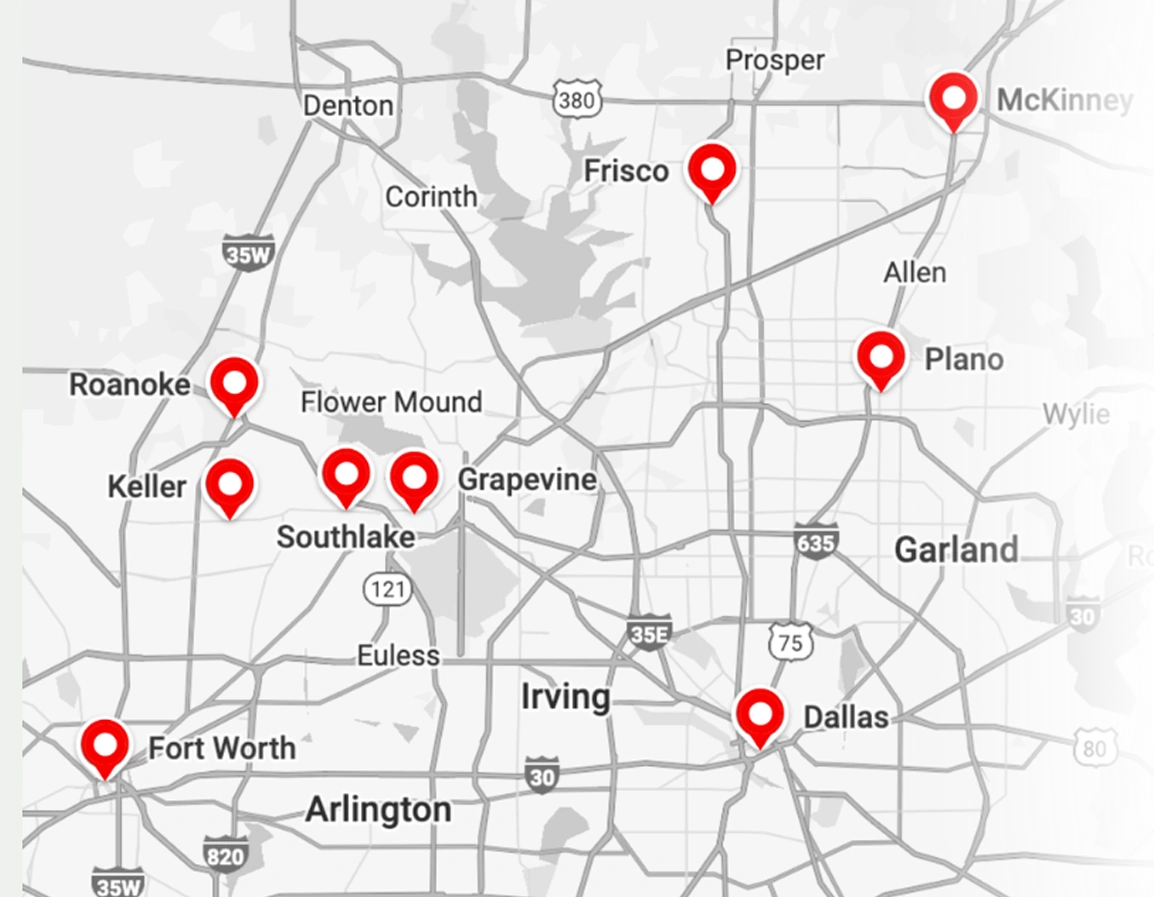
Areas We Serve
Frequently Asked Questions We Receive About Water Heater Repairs
Why is my water heater making a loud popping or rumbling noise?
That rumbling or popping sound is often described as a percolating coffee pot. It is caused by a thick layer of mineral sediment building up at the bottom of your tank—a very common issue with the hard water in the Dallas-Fort Worth area. Water gets trapped beneath this rock-hard sediment, turns to steam, and aggressively bubbles up through the crust. Pact Plumbing can often resolve this by performing a heavy-duty system flush.
I have absolutely no hot water. What is the most likely cause?
If you have a gas water heater, the most common culprits are an extinguished pilot light, a faulty thermocouple (the safety sensor that detects the flame), or a failing gas control valve. If you have an electric water heater, you are likely dealing with a tripped circuit breaker, a blown high-limit switch, or a completely burned-out heating element.
My water heater is leaking from the bottom. Can it be patched or repaired?
It depends on the exact source of the leak. If the water is leaking from the drain valve or the temperature and pressure (T&P) relief valve, our technicians can easily replace those specific parts. However, if the steel body of the tank itself has rusted through and is leaking, it cannot be patched or welded. The entire unit must be replaced immediately before it ruptures and floods your home.
Why is my hot water running out so much faster than it used to?
If your 50-gallon tank is suddenly only giving you 15 gallons of hot water, you usually have one of two problems. The first is a broken dip tube—the plastic pipe that pushes cold water to the bottom of the tank to be heated. When it breaks, cold water mixes directly with the hot water at the top. The second issue (specifically for electric units) is that the lower heating element has burned out, meaning only the top half of your water is actually being heated.
Why is my hot water coming out discolored or rusty?
If the cold water is clear but the hot water is rusty, the inside of your water heater is actively corroding. Every water heater has a “sacrificial anode rod” designed to attract corrosive elements and protect the steel tank. Once that rod is completely dissolved, the water begins to eat away at the tank itself. You need a Pact Plumbing technician to inspect the unit immediately before it fails structurally.
How long does a typical water heater repair take?
Because Pact Plumbing dispatches technicians in fully stocked trucks, we carry the most common universal parts—like thermocouples, heating elements, and gas valves—with us. Once we diagnose the issue, the vast majority of standard water heater repairs can be completed in just 1 to 2 hours, restoring your hot water the very same day.
At what point should I stop paying for repairs and just replace the unit?
We advise following the “50% Rule.” If the cost of the repair is more than half the cost of a brand-new unit, and your current water heater is nearing the end of its typical 10-to-12-year lifespan, replacing it is the much smarter financial decision. Continuing to patch a dying, decade-old unit will only lead to more service calls and lower energy efficiency.
Get Your Water Heater Fixed Today
Contact us for a free consultation and estimate. We’ll be right there and handle the process from start to finish.
Serving Carrollton: water heater repair in Carrollton, TX.