
You need to winterize plumbing in your DFW home every October — and the 2021 freeze taught North Texas exactly why. This guide walks Dallas-Fort Worth homeowners through the complete fall checklist to winterize plumbing before the first hard freeze of the season, what each step protects against, and what each task costs in time and dollars.
Run this checklist by November 1 every year and you dramatically reduce the chances of a burst pipe emergency. Skip it and you’re rolling dice on whether the next freeze is the bad one.
Why DFW Has to Winterize Plumbing
North Texas homes were built for hot weather, not cold. Pipes run through uninsulated attics, exterior walls, and garages because freezes were historically rare. The 2021 February freeze brought sustained temperatures in the teens for three days and burst pipes by the thousands. The pattern has been getting more common since.
Pipes burst at sustained temperatures around 20-25°F, not 32°F. The freeze itself doesn’t break the pipe — the ice plug creates pressure behind it that ruptures the pipe wall. Prevention beats restoration every time.
1. Disconnect Outdoor Hoses
Do by: October 31
A connected hose holds water inside the hose bib and the pipe leading to it. When that water freezes, it expands and cracks the hose bib or the pipe inside the wall. By the time you discover it next spring, the damage is already done.
Disconnect every garden hose. Drain them. Store coiled in the garage. Five-minute job, prevents the most common DFW freeze-damage scenario.
2. Install Hose Bib Insulation Covers
Do by: November 1
Styrofoam hose bib covers cost $3-8 each at any Texas hardware store. They slip over the hose bib and add a few critical degrees of insulation to prevent the bib itself from freezing. Worth the small investment for every hose bib on your DFW home.
3. Insulate Exposed Pipes
Do by: November 15
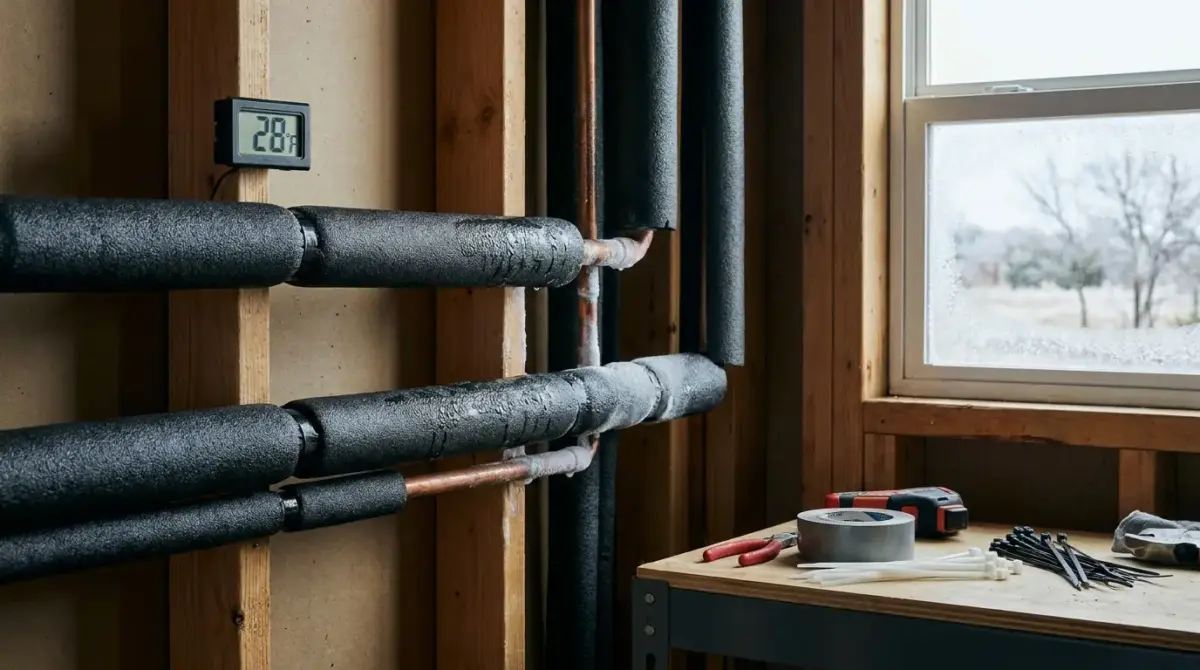
Walk your garage, attic, crawl space, and any unconditioned areas where pipes are visible. Wrap each exposed pipe with foam pipe insulation sleeves. Each sleeve costs $2-5 and slits open to fit over the pipe. Use foil tape to secure.
Pay particular attention to:
- Pipes running along garage exterior walls
- Pipes in attic spaces above unheated rooms
- Pipes leading to outdoor hose bibs
- Pipes in crawl spaces under raised homes
- Water heater supply and return lines in garages
4. Locate and Test the Main Shutoff Valve
Do by: November 1
The water shutoff valve is your single most important freeze emergency tool. Find it. Test it (close it, confirm faucet flow stops, reopen). Label it. Make sure every adult in the household knows where it is and which way to turn it.
If you have an old gate valve that’s seized or hard to turn, get it replaced with a quarter-turn ball valve before winter ($200-400). A valve that won’t close during an emergency is worse than no valve at all.
5. Flush the Water Heater
Do by: November 15
DFW hard water leaves sediment that builds up at the bottom of your tank water heater. Flushing it before winter improves efficiency (your water heater works harder when temperatures drop). Drain a few gallons through the tank’s bottom valve until water runs clear.
6. Inspect Garage Door Weatherstripping
Do by: November 15
An air-tight garage stays significantly warmer than one with gaps under the door. Garages with water heaters and exposed pipes especially benefit from good weatherstripping. Replace any cracked or missing seals — $20-50 of weatherstripping pays for itself by preventing one burst pipe.
7. Save Emergency Numbers
Do by: Today
Add to your phone now:
- Your insurance company’s emergency claims line
- A 24/7 emergency plumber’s number
- Your water utility’s emergency shutoff number (they can close the city-side valve if your house-side is broken)
- Your homeowner policy number
The middle of a freeze at 2 AM isn’t the time to be Googling these.
8. During an Actual Freeze
When the National Weather Service forecasts sustained temperatures below 28°F:
- Open cabinet doors under sinks on exterior walls to let warm air reach the pipes
- Let one faucet on an exterior wall drip slowly overnight (the moving water resists freezing)
- Keep your house heated to at least 55°F if you’re traveling
- Don’t shut off the heat to “save money” — pipe repair costs way more than the heating bill
For freeze forecasts, watch the National Weather Service Fort Worth and the ERCOT grid news for grid stability during prolonged freezes.
9. Smart Water Shutoff Consideration
If you travel often or own a second home in DFW that sits empty during winter, consider installing a smart automatic water shutoff valve. Brands like Phyn, Moen Flo, or Flume monitor your plumbing 24/7 and automatically close the main if they detect a burst pipe. $400-800 installed. Cheap insurance against a freeze event hitting an empty house.
Bottom Line
Winterizing plumbing in a DFW home is a one-Saturday October chore that dramatically reduces freeze damage risk. Disconnect hoses, install bib covers, insulate exposed pipes, locate the shutoff, save emergency numbers. Total cost: $50-100 in supplies. Total time savings if you skip it and a pipe bursts: thousands of dollars and weeks of restoration.
Trusted Local Network
Winterization usually overlaps with HVAC and handyman work — sealing, weatherstripping, attic insulation, gutter cleaning. For related needs, we recommend HVAC services for cold-weather home prep.
Your DFW Winterize Plumbing Specialists
If you’d rather have a pro inspect your plumbing for freeze readiness before the cold hits, PACT Plumbing serves Dallas, Fort Worth, Plano, Frisco, McKinney, Carrollton, Keller, Southlake, Grapevine, and Roanoke with pre-winter inspections and full plumbing service and repair. Contact us today.