
Water pressure problems are one of the most frustrating plumbing complaints DFW homeowners deal with — and one of the easiest to misdiagnose. Low water pressure can come from your city supply, your pressure regulator, your supply lines, your fixtures, or your water heater. This guide walks Dallas-Fort Worth homeowners through how to find which one is actually causing your problem and what each fix costs.
Before you call anyone, take 10 minutes with this checklist. Half the time you’ll find a $0 fix that gets pressure back to normal.
If these checks do not bring your pressure back, our plumbing service and repair team can find the cause, whether it is a failing pressure regulator, a partly closed main shutoff valve or scaled-up galvanized pipe.
Low water pressure in your Dallas-Fort Worth home? Call Pact Plumbing or send an inquiry and we will book a visit.
First: Confirm What “Low Water Pressure” Actually Means
Buy a $10 water pressure gauge that screws onto a hose bib. Open the spigot. Read the gauge. Normal residential water pressure in DFW is 50-80 PSI. If you’re under 40, you have a real low water pressure problem. If you’re over 80, you have a high water pressure problem (which is also bad — damages fixtures and water heater). If you’re 50-80, your “low” pressure might just be flow restriction at specific fixtures, not actual pressure.
1. Clogged Aerators (Free, 5 Minutes)
If only specific faucets have low water pressure but the rest of the house is fine, the aerators are clogged with DFW hard water mineral scale. Unscrew the aerator from the faucet (use a rag for grip if it won’t budge), soak it in vinegar for an hour, scrub with a toothbrush, reinstall.
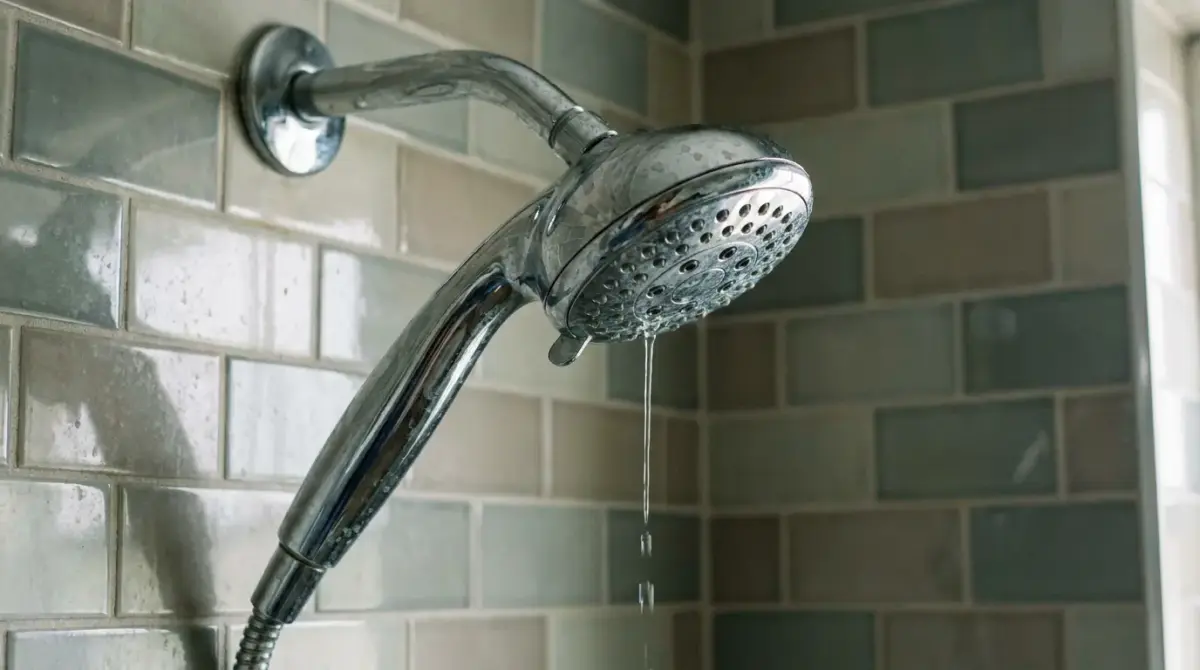
For showerheads: same process. Many DFW homeowners notice “water pressure” complaints disappear after this 5-minute fix.
2. Failing Pressure Regulator
Most DFW homes have a pressure regulator (PRV) installed at the main water line entry. It reduces the high city pressure down to a safe residential level. Regulators fail in two ways:
- Fail closed: pressure drops dramatically throughout the house
- Fail open: pressure spikes to dangerous city-level pressure (100+ PSI) and stays there
Fix: pressure regulator replacement runs $300-600 installed. Lifespan is typically 7-12 years in DFW. If your house is 15+ years old and you’re seeing pressure problems, this is the likely cause.
3. Partially Closed Main Shutoff Valve
Sounds basic but it happens constantly. The main shutoff valve at your house has been bumped or partially closed during work and never reopened fully. Quarter-turn ball valves should be parallel to the pipe. Gate valves should be all the way open (turn counterclockwise until you can’t anymore, then back a quarter turn).
4. Scaled-Up Galvanized Pipes
If your DFW home was built before 1970, the original supply lines may be galvanized steel. After 50+ years of hard water, the inside of those pipes has scaled up so dramatically that pipe diameter is reduced by 50-75%. Water pressure at the meter is fine; pressure at the fixtures is terrible.
Fix: partial or full repipe with PEX or copper. The only real solution for severely scaled galvanized supply lines. A full repipe of an average DFW home runs $4,000-12,000 depending on size and complexity.
5. Water Heater Issues
If your low water pressure problem is only on the HOT water side, the water heater is involved. Sediment buildup at the bottom of the tank blocks the cold inlet dip tube or restricts flow. The hot side comes out weak while cold remains normal.
Fix: flush the water heater tank. If that doesn’t restore hot side pressure, the dip tube or supply connections may need replacement.
6. City Supply Issues
If your gauge reads low at the meter and your neighbors report the same issue, your DFW water provider may have a supply problem — repairs, peak-hour demand drops, or a city main break. Call your provider before spending money on plumbing diagnostics. The Texas Commission on Environmental Quality drinking water complaints page tracks service issues if you can’t reach your provider directly.
Quick Diagnostic Walkthrough
- Buy a $10 hose bib pressure gauge. Test pressure at the outdoor hose bib.
- If reading is under 40 PSI everywhere: check main shutoff valve, then check pressure regulator
- If reading is 50-80 PSI but specific fixtures are weak: clean aerators and shower heads
- If only hot water is weak: flush the water heater
- If pressure dropped suddenly after recent yard work: check for a damaged supply line in the yard
- If gauge reads 90+ PSI: failing pressure regulator, urgent fix needed before water heater or fixtures fail
When to Call a Plumber
- You can’t access your pressure regulator or main shutoff safely
- Pressure gauge reads under 30 PSI or over 90 PSI
- You’ve cleaned all aerators and pressure is still low
- Hot water side fails even after a tank flush
- You suspect galvanized pipe scaling and need a repipe quote
Bottom Line
Low water pressure in a DFW home is usually one of six things. Buy the $10 pressure gauge before anything else and let it tell you whether the problem is at the meter or at the fixtures. Aerators, regulators, and water heater flushes solve most cases for under $300 in parts. Galvanized pipe scaling means a bigger conversation about repiping.
Trusted Local Network
Low water pressure issues sometimes overlap with HVAC and other home-system trades. For homeowners outside DFW, HVAC services that intersect with pressure-related plumbing work are handled by specialized contractors in their service area. And for out-of-area plumbing needs related to pressure regulators and supply lines, regional plumbing services for pressure diagnostics cover the same scope.
Your DFW Water Pressure Specialists
If your water pressure issue is past the DIY line, PACT Plumbing serves Dallas, Fort Worth, Plano, Frisco, McKinney, Carrollton, Keller, Southlake, Grapevine, and Roanoke with full plumbing service and repair including pressure regulator replacement and pipe diagnostics. Contact us today.