
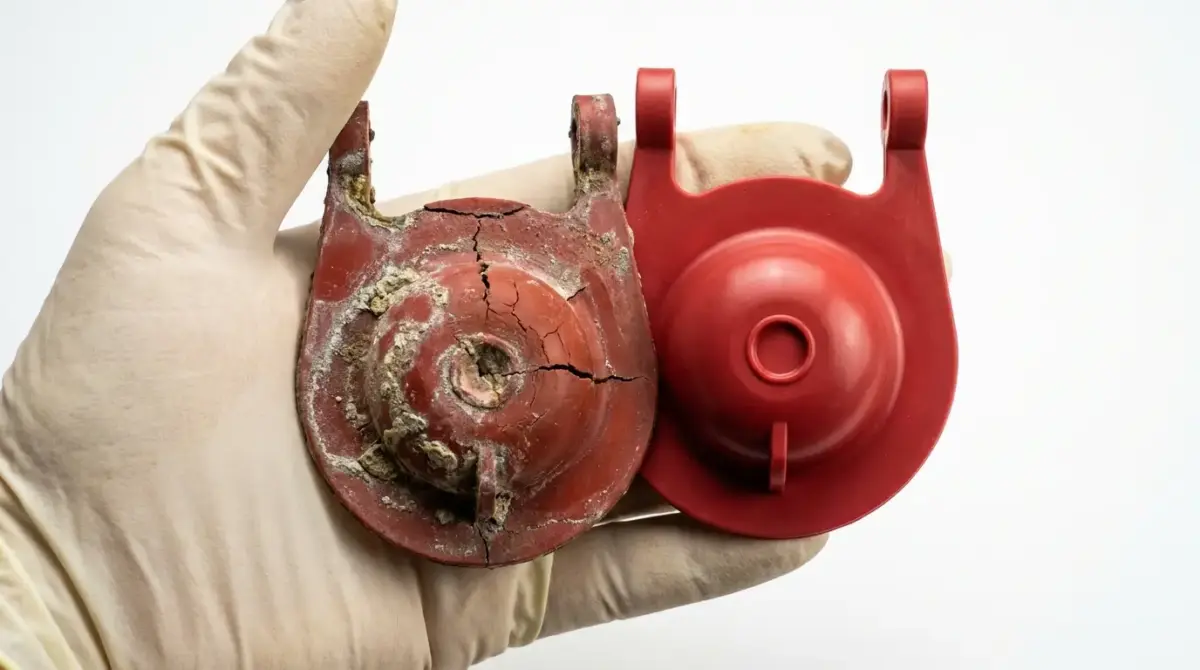
A failing toilet flapper is the most common silent water-waster in any DFW home. According to the EPA, a leaking toilet flapper wastes up to 200 gallons per day — and at North Texas water rates that’s $30-80 a month you’re flushing away without knowing it. This guide walks Dallas-Fort Worth homeowners through diagnosing flapper failure, replacing the flapper in under 10 minutes, and choosing the right replacement for your toilet model.
What a Toilet Flapper Does
The flapper is the rubber disc at the bottom of your toilet tank. When you press the flush handle, the chain lifts the flapper, water rushes out into the bowl, the tank empties. Once the tank is empty, the flapper falls back into its seat and seals the flush valve so the tank can refill.
When the flapper rubber degrades, warps, or develops mineral buildup from DFW hard water, the seal fails. Water slowly leaks past the flapper into the bowl. The fill valve kicks on periodically to top off the tank. Constant cycling that you barely notice — except on your water bill.
The 5-Minute Food Coloring Test
Best test for a leaking toilet flapper:
- Remove the toilet tank lid
- Add 5-10 drops of food coloring to the tank water
- Wait 15 minutes without flushing
- If color shows up in the bowl water, the flapper is leaking
Do this test on every toilet in the house. Most DFW homes have at least one leaking flapper at any given time, and homeowners typically don’t notice until the water bill spikes.
Why DFW Flappers Fail Faster
North Texas hard water mineral content (15-18 grains per gallon — extremely high) accelerates flapper degradation in three ways:
- Mineral scale builds on the flapper surface, warping it over 2-3 years
- Scale deposits on the flush valve seat prevent the flapper from sealing fully
- Chlorine and chloramine in DFW treated water break down rubber faster than untreated water
Expected flapper lifespan nationally: 5-7 years. In DFW: 2-4 years.
Choosing the Right Replacement Flapper
Three categories of toilet flappers, each requires a specific match:
Standard 2-Inch Flapper
Fits most pre-2005 toilets. The original flush valve opening is about 2 inches wide. Universal flapper packages typically work fine.
Standard 3-Inch Flapper
Common in newer toilets (post-2005) including most low-flow models. Larger flush valve opening for faster water release. Make sure the package specifies 3-inch.
Brand-Specific Flappers
Some toilet brands (American Standard Champion, Kohler Class 5, certain TOTO models) use proprietary flush systems that require brand-specific flappers. Universal flappers will leak or not seal. Match the brand and model number. Take the old flapper to the hardware store as your reference.
How to Replace a Toilet Flapper
- Shut off the water supply at the angle stop behind the toilet (turn clockwise)
- Flush to empty the tank
- Sponge out remaining water at the bottom of the tank
- Unhook the chain from the flush handle arm
- Pull the flapper’s ear flanges off the overflow tube pegs (or unscrew if it’s the bracket style)
- Install the new flapper in reverse — slide ears over pegs, hook chain to flush handle arm
- Adjust chain length: half-inch of slack when flapper is closed
- Turn water back on, let tank refill
- Test by flushing and checking that flapper seats completely
Total time: 5-10 minutes. Total cost: $5-12 for the part.
What If the New Flapper Still Leaks?
If you’ve installed a fresh flapper and the food coloring test still shows a leak, the problem is the flush valve seat itself, not the flapper. Mineral scale or pitting on the valve seat prevents any flapper from sealing.
- First try: drain the tank, scrub the valve seat with fine steel wool or a Scotch-Brite pad to remove scale
- If that fails: flush valve replacement (more involved — toilet has to be pulled). Usually $80-200 in parts plus labor
- Old toilet: consider replacement with a new low-flow toilet. New units use less than half the water per flush and the water savings often justify the $300-500 install
Water Bill Math
The EPA WaterSense program estimates a moderately leaking toilet wastes 200 gallons per day. At Dallas water rates (averaging $5-7 per 1,000 gallons in 2026), that’s roughly $30-40 per month per leaking toilet. The $5 flapper pays for itself in two days.
If your DFW water bill suddenly jumped without obvious cause, food-coloring-test every toilet in the house before anything else. You’ll find the leak 70% of the time.
Bottom Line
Toilet flapper replacement is the highest-ROI plumbing fix any DFW homeowner can do. Five-minute job, five-dollar part, saves hundreds in water bills over a year. Test every toilet with food coloring twice a year and replace any flapper that fails the test. The job is simpler than changing a light bulb.
Trusted Local Network
A flapper swap is the most DIY-friendly plumbing repair. For homeowners outside DFW who want general handyman support for basic plumbing fixes, that scope is handled by local handyman contractors. And for those needing drain and toilet services in other regions, specialized plumbing contractors cover the same scope.
Your DFW Toilet Repair Specialists
If a toilet flapper or flush valve fix is past the DIY line, PACT Plumbing serves Dallas, Fort Worth, Plano, Frisco, McKinney, Carrollton, Keller, Southlake, Grapevine, and Roanoke with toilet repair and replacement service. Contact us today.