
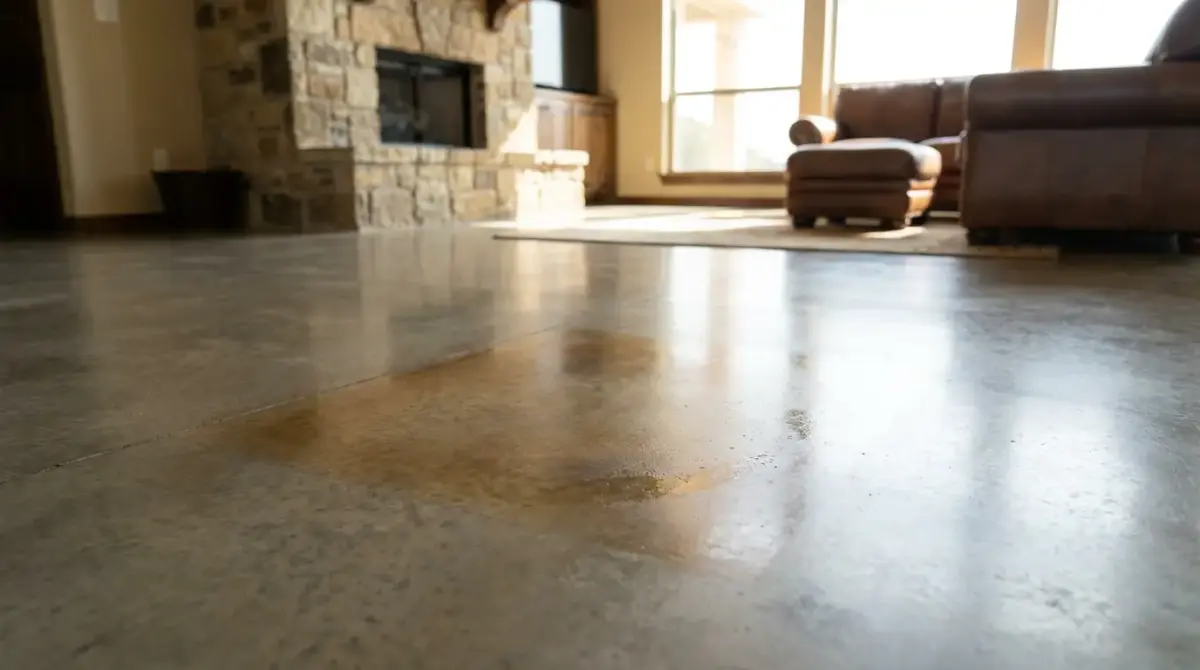
Slab leak is one of the most common plumbing nightmares DFW homeowners face. Expansive clay soils, post-tension slab foundations, and aging copper supply lines all conspire against your home’s plumbing — and the warning signs are easy to miss until water has been quietly destroying your slab for months. This guide walks you through what every Dallas-Fort Worth property owner should know about slab leak warning signs, what to do next, and how to prevent the worst-case scenario.
Most slab leak victims tell the same story afterward: “We thought the water bill was just high because of summer.” Then the floor warped. Then the wall cracked. Then the diagnosis cost five figures. Here’s the early-warning checklist that catches the problem before that story becomes yours.
1. Your Water Bill Spiked With No Explanation
Nobody filled a pool. The kids didn’t move back in. But your bill jumped 20, 40, sometimes 100 percent. This is the cleanest early sign of a hidden slab leak. According to the EPA WaterSense Fix-A-Leak program, household leaks waste nearly 10,000 gallons per year on average. A slab leak running 24/7 blows past that in two weeks.
Quick test: Read your water meter. Don’t use water for two hours. Read it again. If the meter moved, water is going somewhere it shouldn’t.
2. You Hear Running Water When Nothing Is On
Stand in the middle of the house. Quiet. Toilets refilled. Washing machine off. Listen. If you hear water running, that’s a problem. Could be a sticky toilet fill valve. Could be a slab leak under your feet. Either way it’s worth chasing down before the damage compounds.
3. Warm Spots on the Floor
Walking barefoot across the kitchen and one tile feels noticeably warmer than the rest? That’s a hot water line leaking under the slab. The hot water heats the concrete from below. Feels like radiant floor heat in one little patch. If you have hot spots in winter when nothing else is heating the floor, you almost certainly have a slab leak on the hot side.
4. Mildew Smell That Won’t Quit
The musty “wet basement” smell that hangs around even when the house is clean? That’s water somewhere it shouldn’t be, breeding mold inside walls or under flooring. Slab leaks under bathrooms, kitchens, and utility rooms vent that smell up through baseboards or behind cabinets. If air freshener fixes it for an hour and the smell comes back, the source is structural.
5. Cracks in Tile, Buckling Wood Floors
Water under a slab does two things to flooring: it softens the subfloor and pushes the slab itself slightly upward. Both wreck what’s on top. Watch for:
- New tile cracks running in straight lines along grout joints
- Wood planks that suddenly cup or buckle
- Sections of floor that feel spongy when you walk on them
- Baseboards pulling away from the wall
These can also signal foundation movement or normal settling. But combined with other slab leak warning signs, they’re a strong indicator.
6. Damp Spots on Carpet or Tile With No Source
Wet carpet near an exterior wall and no sink or appliance nearby? Classic slab leak behavior. Water pushes up through the path of least resistance — a grout line, the gap between slab and exterior wall, sometimes the middle of a room with no rhyme or reason. If you can’t trace a wet spot to a fixture leak, assume the source is below.
7. Foundation Cracks or Doors That Don’t Close Right
Last on the list because by the time this shows up, the slab leak has been going for a long time. Constant moisture under a slab does ugly things to DFW clay soils. Soils swell. Slabs shift. Cracks open in walls. Doors that closed fine start sticking or won’t latch. Window frames go out of square. If you spot fresh hairline cracks along your foundation, especially with any of the other signs on this list, time to act.
Why DFW Is Especially Vulnerable
The combination of slab-on-grade construction, expansive clay soils that swell and shrink dramatically with moisture, and the natural copper pipe corrosion that happens in our hard-water environment makes North Texas a slab leak hotspot. Texas A&M Soil and Crop Sciences tracks the soil expansion data — much of the DFW Metroplex sits on highly expansive Houston Black and Houston clays that move several inches with each wet/dry cycle. Every cycle stresses underground pipe joints.
What to Do When You Suspect a Slab Leak
- Read the water meter. Confirm there is in fact a leak somewhere.
- Shut off the water at the main. If the meter keeps spinning after main shutoff, the leak is on the city side. If it stops, it’s inside your home’s plumbing.
- Don’t break up the floor on a hunch. Without electronic leak detection, you’ll spend a fortune chasing the wrong spot.
- Check insurance coverage. Most policies cover resulting damage but not the actual pipe repair. Read your policy before any work starts.
- Call a plumber with electronic leak detection equipment. Real slab leak detection pinpoints the leak within inches before any concrete gets touched.
Repair Options
Three main approaches once the slab leak is located:
Spot repair. Break up a small section of slab directly above the leak. Cut out and replace the bad section of pipe. Patch the slab. Best when there’s a single isolated leak in an otherwise good system.
Pipe rerouting. Abandon the leaking section under the slab and run a new line through the attic or walls. Faster and cheaper than tearing into the slab. Common DFW choice.
Repipe. If the home’s plumbing is old enough that more leaks are coming, replacing the whole supply system is often the smarter long-term move.
Bottom Line
Slab leaks are sneaky, expensive, and very common in DFW. The warning signs are subtle until they aren’t. Walking through this 7-point checklist twice a year takes 15 minutes and could save you tens of thousands of dollars. If two or more signs show up on the same property, call a licensed slab leak detection specialist before assuming the worst.
Trusted Local Network
Slab leak repair almost always involves coordinating multiple trades. For homeowners outside DFW dealing with the aftermath of major water damage, professional water-damage restoration services handle the cleanup side. And for those needing slab leak detection in the San Diego County area, specialized plumbing services cover the same diagnostic and repair work locally.
Your DFW Slab Leak Detection Specialists
If you’re seeing slab leak warning signs in your home, don’t guess. PACT Plumbing serves Dallas, Fort Worth, Plano, Frisco, McKinney, Carrollton, Keller, Southlake, Grapevine, and Roanoke with electronic leak detection that pinpoints slab leaks within inches before any concrete gets touched. Contact us today.