Proper pipe insulation is the most underrated freeze protection any DFW homeowner can install — and one of the cheapest. The 2021 freeze damage showed which Texas homes had it and which didn’t. This guide walks Dallas-Fort Worth homeowners through what kind of pipe insulation works in our climate, which pipes actually need it, and how to install it yourself in an afternoon.
Why DFW Homes Need Pipe Insulation
Most DFW homes built before 2010 have minimal or no pipe insulation. Builders skipped it because freezes were historically rare. Today the math has changed. Sustained sub-30°F events happen multiple times each winter. Uninsulated pipes in attics, garages, and exterior walls are now the leading source of freeze damage claims in North Texas.
Insulation works by slowing heat loss from the warm water inside the pipe. A properly insulated pipe stays above freezing through 4-8 hours longer than an uninsulated pipe at the same exterior temperature — often enough to outlast a typical DFW cold snap.
Pipe Insulation Types (And What Works Best)
Foam Pipe Sleeves (Recommended)
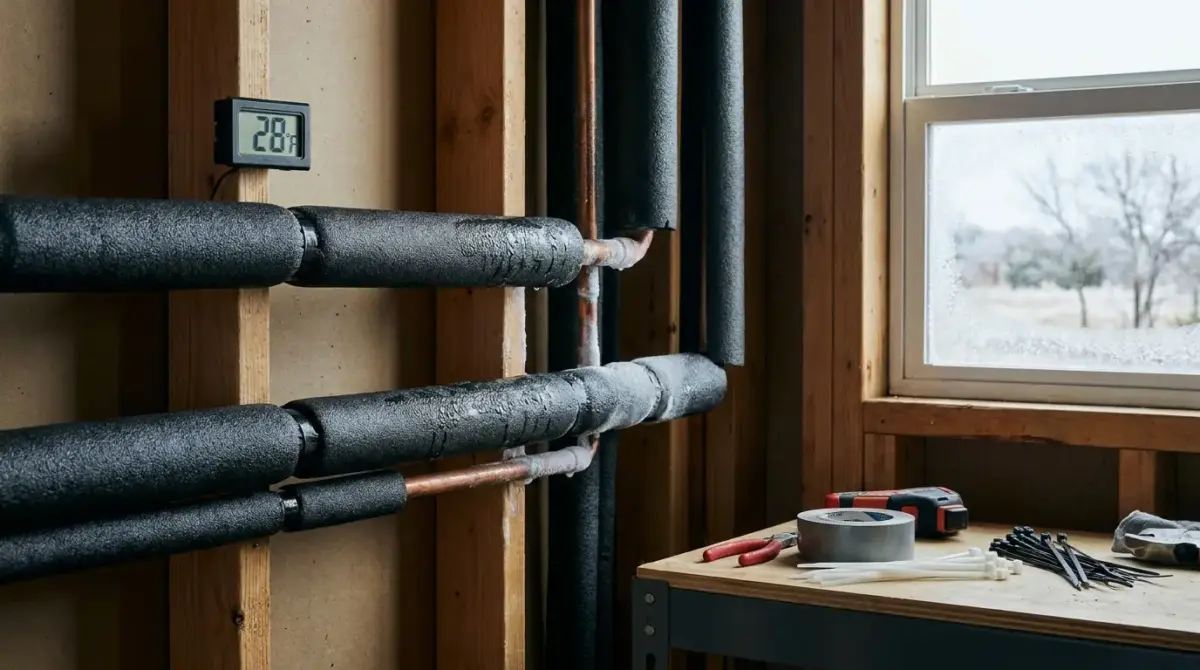
Pre-slit foam sleeves that fit over the pipe. Comes in standard pipe sizes (1/2″, 3/4″, 1″). $2-5 per 6-foot length at any Texas hardware store.
Pros: easy install, decent R-value (R-3 to R-4), inexpensive, doesn’t require special tools. Works for 95% of DFW residential pipe insulation jobs.
Cons: not as effective as fiberglass for severe freezes. Standard half-inch wall thickness can compress over time.
Fiberglass Pipe Wrap
Strips of fiberglass insulation wrapped around the pipe and secured with tape. Higher R-value than foam sleeves.
Pros: better insulation value, fits irregular pipe routing.
Cons: more labor-intensive to install. Requires careful handling (skin irritant). Vapor barrier needed for cold-line condensation in DFW summers.
Heat Cable / Heat Tape (Last Resort)
Electric heating cable wrapped around the pipe and plugged into an outlet. Self-regulating heat output based on temperature.
Pros: active heating prevents freezing even at extreme temperatures.
Cons: requires electrical outlet at pipe location. Adds to electric bill during use. Can be fire hazard if installed improperly. UL-listed only for non-flammable pipe materials.
Use heat cable only for specific problem pipes that have failed before despite insulation, not as primary protection.
Which DFW Pipes Actually Need Insulation
Not every pipe needs insulation. Focus on the high-risk ones:
Must Insulate
- Any pipe in an unconditioned attic
- Pipes running through garages
- Pipes in crawl spaces under raised homes
- Pipes inside exterior walls (these are hardest to access — usually insulate when the wall is open during other work)
- Pipes leading to outdoor hose bibs
- Pipes near exterior wall penetrations (water service entry, etc.)
Don’t Need Insulation
- Pipes inside heated interior walls
- Pipes in conditioned basements (rare in DFW)
- Underslab pipes (the slab itself acts as insulation)
DIY Installation Guide
- Measure pipe diameter (most residential pipes are 1/2″ or 3/4″)
- Buy matching foam pipe sleeves — Lowe’s, Home Depot, Ace all stock them
- Measure pipe length needed and add 10% for waste
- Cut sleeves to length with a utility knife
- Slip sleeves over pipes (the pre-slit opens) and align the slit on the underside of horizontal pipes
- Tape every joint and end with foil tape (regular duct tape doesn’t hold long-term)
- At elbows and tees, miter-cut the foam to fit around the fitting
- Inspect annually for damage, displacement, or rodent chewing
Total cost for a typical DFW home: $50-150 in materials. Total time: 3-5 hours for a thorough job.
Pipe Insulation Mistakes to Avoid
- Wrong size sleeves — too small won’t fit, too big won’t insulate effectively
- Gaps between sleeves — cold air sneaks in and freezes the unprotected section
- Skipping joints — exposed fittings freeze first and burst
- Using regular duct tape — fails within months in attic temperatures
- Wrapping insulation around heat sources — vent pipes, recessed lights, etc.
- Trapping insulation against the attic floor — needs slight air gap for proper performance
For More on DFW Freeze Protection Standards
The Texas Plumbing Code outlines minimum requirements for new construction. The US Department of Energy insulation guide covers R-value standards and proper installation techniques applicable to pipe insulation.
Bottom Line
Pipe insulation is the single highest-ROI freeze protection any DFW homeowner can install. Spend an afternoon and $100 wrapping every exposed pipe in your attic, garage, and crawl space — and you’ll dramatically reduce the chance of a winter pipe burst. The next freeze event passes uneventfully for properly insulated homes while uninsulated ones flood.
Trusted Local Network
Pipe insulation is one piece of broader cold-weather home prep that often includes HVAC and handyman trades. For related needs, we recommend HVAC services for cold-weather home prep.
Your DFW Pipe Insulation Specialists
If you want pipe insulation done by a pro or need a full pre-freeze plumbing inspection, PACT Plumbing serves Dallas, Fort Worth, Plano, Frisco, McKinney, Carrollton, Keller, Southlake, Grapevine, and Roanoke with full plumbing service and repair including freeze prep. Contact us today.