
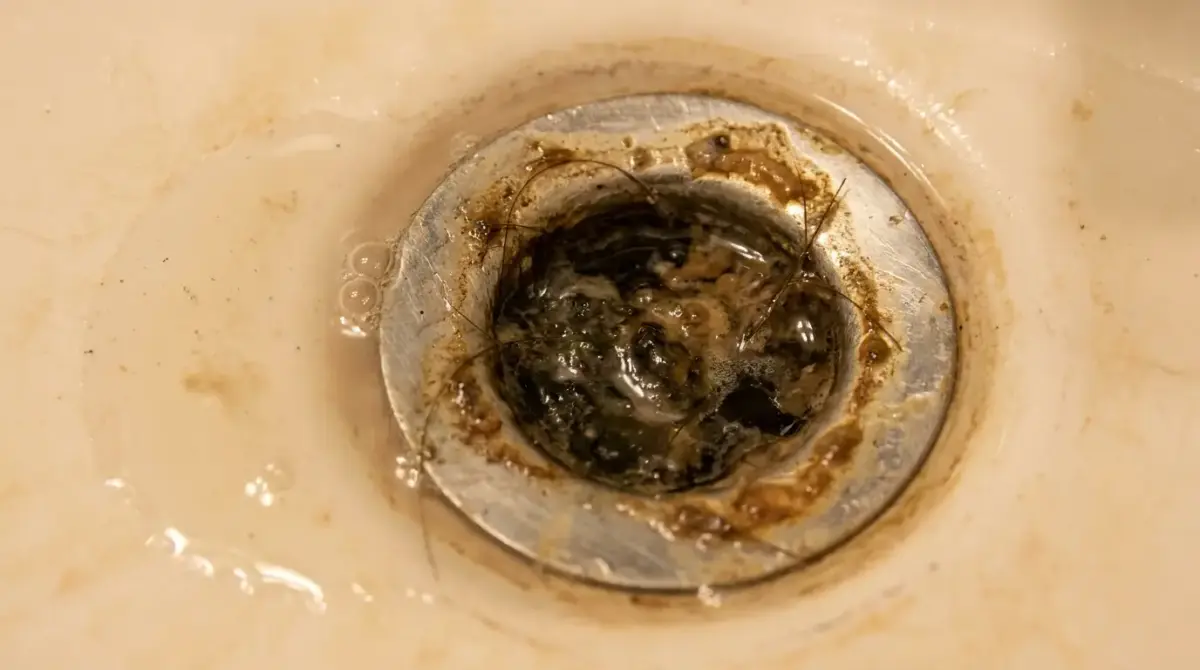
A drain smell is the most common summer plumbing complaint across Dallas-Fort Worth. North Texas heat dries out plumbing traps faster, accelerates bacterial growth in drain biofilm, and turns minor odor problems into make-your-eyes-water sewer gas issues. This guide walks DFW homeowners through what causes a drain smell, the five fixes that actually work, and how to prevent the problem from coming back.
What That Smell Actually Is
Drain smells come from one of two sources, and the fix depends entirely on which one:
Sewer gas: sharp sulfur or rotten-egg smell. Means sewer gas is bypassing your plumbing trap somewhere and entering the house. Health hazard if persistent.
Biofilm: sweet/musty/funky smell. Means bacteria are colonizing the inside of your drain pipes and metabolizing soap scum, food residue, hair, and skin oils. Gross but not dangerous.
Most “drain smell” complaints in DFW homes are biofilm. True sewer gas issues are less common but more serious.
Fix 1: Run Water in Every Drain (Free, 2 Minutes)
Every drain in your house has a P-trap — the U-shaped pipe under the fixture that holds water. That water seals out sewer gas. In rarely-used drains (guest bathrooms, basement floor drains, utility sinks), the trap water evaporates over a few weeks. Once it’s gone, sewer gas pours into the house.
Walk through your house. Run water in every sink, tub, and shower for 30 seconds. Pour a cup of water into any floor drain. Wait 24 hours and recheck — most “sewer gas” smells go away with this fix alone.
Fix 2: Clean the Drain Biofilm
For musty drain smells coming from regularly-used kitchen and bathroom sinks, the problem is bacterial biofilm. Two approaches:
Hot Water + Dish Soap
Boil a kettle. Mix in a tablespoon of dish soap (the surfactant breaks up biofilm). Pour down the drain slowly. Wait 10 minutes. Flush with cold water. Repeat weekly for a few weeks until the smell stops returning.
Enzyme Drain Treatment
Products like Bio-Clean or Roebic Drain Care contain beneficial bacteria that out-compete the smelly bacteria in your drain biofilm. Monthly maintenance dose keeps drains smelling neutral and reduces clogs. Won’t work overnight but solves the problem permanently within 30-60 days of regular use.
Fix 3: Check Your Garbage Disposal
If the kitchen sink smells but the bathroom sink doesn’t, the garbage disposal is the likely culprit. Food particles get trapped under the splash guard and in the seal between the disposal and the sink, decomposing in a warm dark place.
Fix: Pour a tray of ice cubes plus a half-cup of vinegar and a tablespoon of dish soap into the disposal. Run with cold water for 30 seconds. Then drop in a sliced lemon and run again. Monthly maintenance keeps the disposal smelling fine.
Fix 4: Check the P-Trap
If running water and cleaning didn’t fix the smell, the P-trap under the affected fixture may be clogged with gunk that’s decomposing. Put a bucket under it, unscrew the slip nuts on either side, dump the trap contents, scrub it out with a bottle brush and dish soap, reinstall.
Fix 5: Check the Vent Pipe
Every plumbing fixture in your house connects to a vent pipe that runs through the roof. The vent allows pressure equalization during drainage and lets sewer gases escape outside the house. If a vent gets clogged by leaves, bird nests, or critter debris, sewer gas can’t escape normally and starts forcing its way through traps into the house.
This is harder to diagnose. Signs of vent issues: gurgling sounds when drains empty, slow drainage even when not clogged, multiple drain smells starting simultaneously. The Texas Plumbing Code sets specific venting requirements — a licensed plumber can scope your vent stack from the roof to confirm.
Common DFW-Specific Smell Causes
Dried-out Traps from AC Use
DFW summers run AC constantly. The dry conditioned air actually evaporates P-trap water faster than humid air would. This is why drain smells are way more common in July-September than spring or fall in North Texas.
Slab Leak Mildew
If the smell is more “mildew” than “drain,” consider a slab leak. DFW slab leaks create damp environments under floors where mold grows aggressively. If running water doesn’t fix the smell, get hydrostatic testing.
Sulfur Bacteria in Water Heater
If only hot water smells like rotten eggs, the issue is sulfur-reducing bacteria growing in your water heater tank reacting with the anode rod. Fix: flush tank, raise temperature briefly to 140°F to kill the bacteria, switch to an aluminum anode rod.
When to Call a Plumber
- Multiple drains smelling simultaneously (suggests venting or main line issues)
- Sharp sulfur smell persists after running water in every drain
- Smell is accompanied by gurgling sounds or slow drainage
- You suspect a slab leak (mildew smell, warm floor spots, high water bill)
- Hot water smells like rotten eggs but cold water is fine
Bottom Line
Most drain smells in DFW homes are biofilm or dried-out P-traps — both DIY fixes that take 10 minutes. Run water in every drain monthly, use enzyme treatments quarterly, and you’ll never deal with serious drain smell issues. Save the plumber call for vent problems, slab leaks, or sewer gas that persists after all the DIY fixes.
Trusted Local Network
Drain smells sometimes turn out to be coming from adjacent surfaces — soaked carpet, water-damaged baseboards, mildew in subfloor. For homeowners outside DFW dealing with carpet odor that’s adjacent to (not caused by) the drain, specialized rug and carpet odor-removal services handle that side. And for general handyman work that often accompanies fixing the underlying moisture issue, general home-services contractors cover baseboard replacement and subfloor inspection in their service areas.
Your DFW Drain Specialists
If your drain smell persists past DIY fixes, PACT Plumbing serves Dallas, Fort Worth, Plano, Frisco, McKinney, Carrollton, Keller, Southlake, Grapevine, and Roanoke with vent inspection, clogged drain service, and full diagnostic. Contact us today.